
Field Notes · September 28, 2025 · 6 min · By Rohan Chatterton
Saline vs. silicone implants: the core difference
The two main implant types feel different and fail differently.
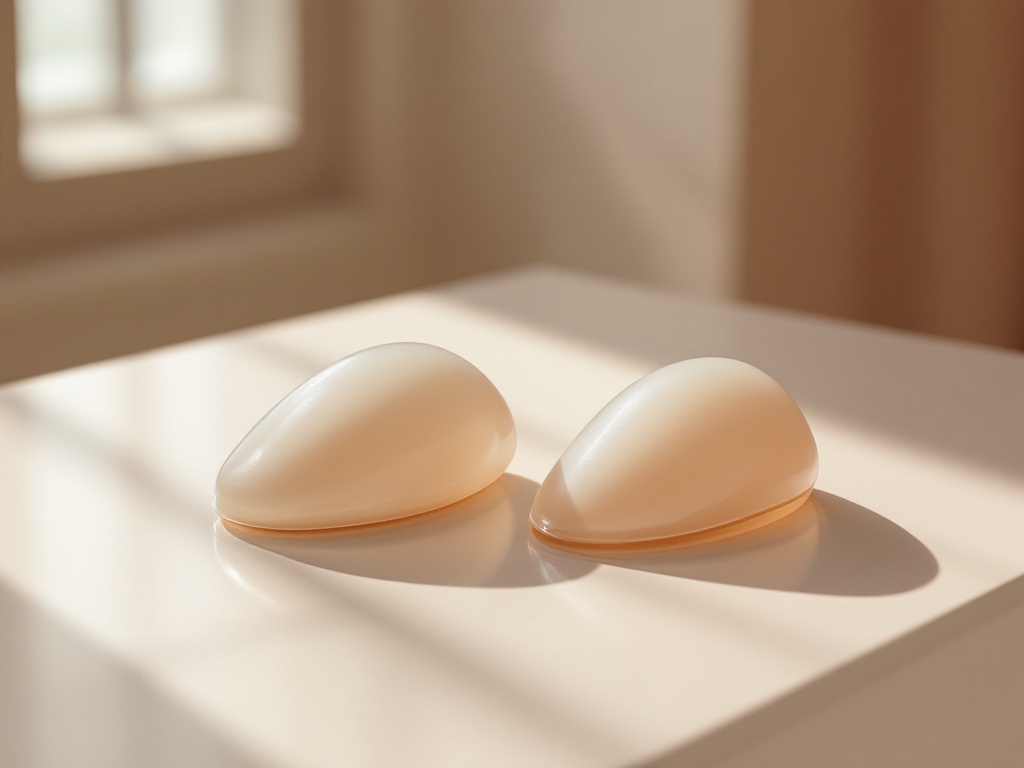
The first technical choice in implant-based breast augmentation is the fill: saline or silicone. Both are FDA-approved and widely used, and they differ in feel, behavior, and how a rupture shows up.
Saline implants are filled with sterile salt water. They are inserted empty and filled during surgery, allowing a slightly smaller incision and easy adjustment, and if one ruptures, the body harmlessly absorbs the saline and the deflation is obvious, prompting straightforward replacement. Their downside is feel, saline can feel firmer and is more prone to visible rippling, especially in thinner patients. Silicone implants are filled with a cohesive silicone gel that more closely mimics the feel of natural breast tissue, which is why most patients today choose them. The trade-off is that a rupture can be silent, the gel stays largely in place, so periodic imaging is recommended to detect it.
Neither is universally better; the choice depends on your tissue, desired feel, and preferences about monitoring. Thin patients often favor silicone for its natural feel and lower rippling; some prefer saline's straightforward rupture detection. If you do choose silicone, the next decision is how cohesive the gel should be and what shape to use, covered in cohesive gel implants and the shape question. A surgeon helps weigh these factors against your anatomy. Understanding the fundamental difference, feel and how failure presents, lets you participate in a decision that shapes both the result and your follow-up over the years.
Related reading: How long breast implants last and when to replace them.
Further reading: Style 410 highly cohesive silicone breast implant core study results at 3 years (Plast Reconstr Surg 2007); Ideal Implant Structured Breast Implants: Core Study Results through 10 Years (Plast Reconstr Surg 2023); New Evaluation Procedure for Multi-Dimensional Mechanical Strains and Tangent Moduli of Breast Implants: IDEAL IMPLANT(®) Structured Breast Implant Compared to Silicone Gel Implants (Bioengineering (Basel) 2019).