
Myth Check · August 6, 2026 · 5 min · By Beatriz Holmgren
Drop and Fluff: What Actually Happens to Implants in the First Three Months
The popular phrase describes a real process, but the mechanism is tissue relaxation, not implant expansion. Here is what surgeons actually observe, and why timelines vary so much.
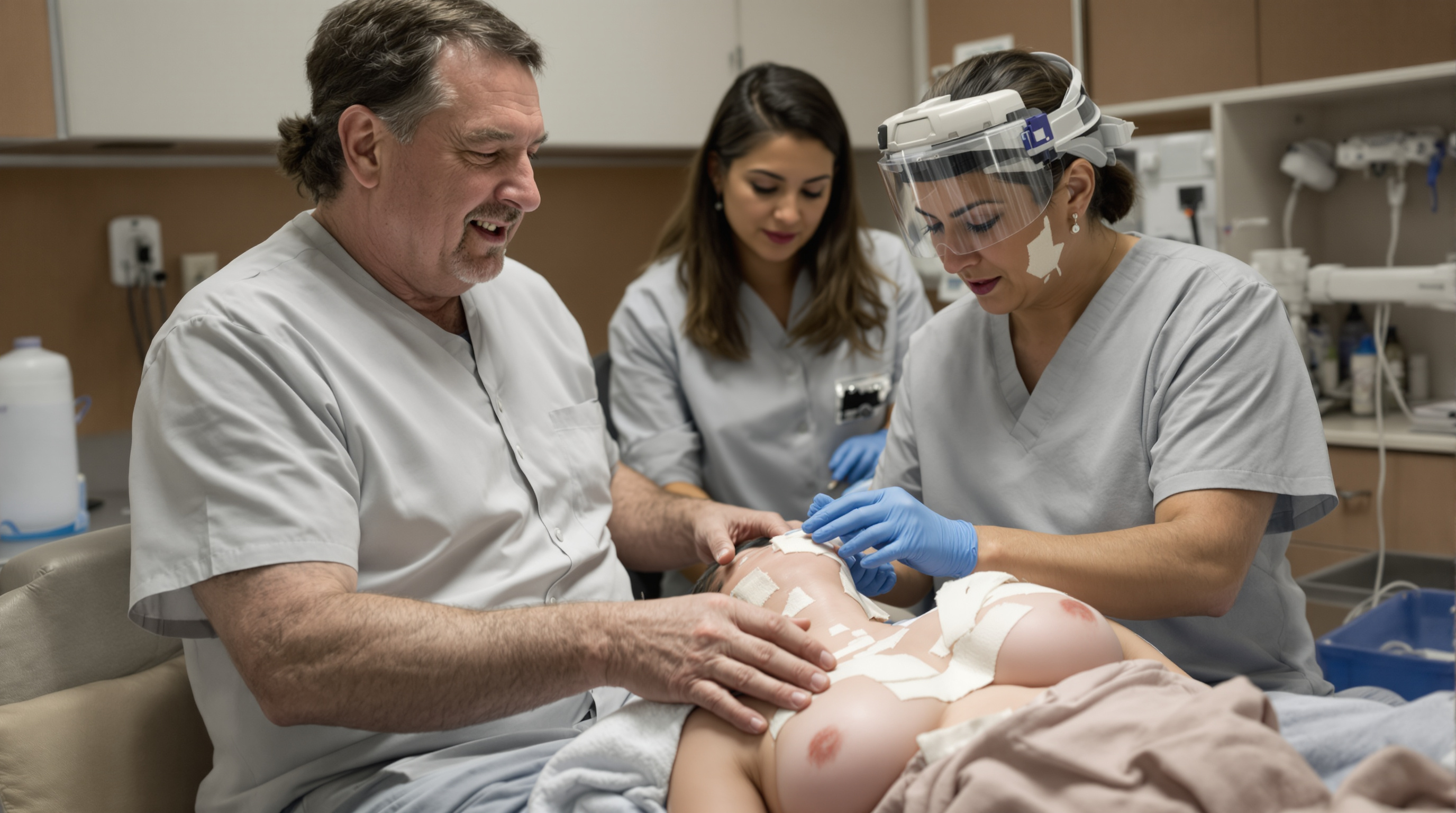
Search any breast augmentation forum and you will find the phrase within minutes: drop and fluff. Patients use it to describe the transition from tight, high, compressed early results to a softer, lower, rounder final shape. The phrase is memorable, and the phenomenon it describes is real. But the way it is often explained, as if the implant itself inflates or grows into position, is not accurate. Understanding what actually changes in those first weeks helps patients judge their own recovery against realistic expectations rather than someone else's photo timeline.
The implant does not change. The tissue around it does.
A silicone or saline implant leaves the operating room at its final size and shape. Nothing about the device expands, softens, or migrates on its own. What changes is the biological envelope containing it. Immediately after surgery, three forces compress and elevate the implant: swelling in the breast and chest wall, tightness in skin and breast tissue that has not yet stretched to accommodate new volume, and, in submuscular placements, tension from the pectoralis major muscle sitting directly over the upper portion of the device.
Swelling pushes tissue outward and upward, which is why early results often look high on the chest with exaggerated upper pole fullness and a flattened or compressed lower pole. As inflammation resolves over roughly two to six weeks, that upward pressure eases. Simultaneously, the skin and the inframammary fold region undergo mechanical creep, a well documented property of soft tissue in which sustained stretch causes gradual lengthening. The lower pole of the breast slowly expands to accept the implant's volume, allowing the device to settle into the pocket the surgeon created.
The fluff part of the phrase describes what happens as the lower pole stretches: volume that was compressed upward redistributes downward and forward, producing a rounder, more projected lower breast and a softer, more natural upper slope. Nothing was added. The same volume simply occupies a more relaxed envelope.
Why muscle placement changes the timeline
Patients with submuscular or dual plane placement typically experience a longer settling period than those with subglandular placement, and the reason is mechanical. The pectoralis major is a strong muscle that responds to a foreign object beneath it the way it responds to any stretch: with tone and resistance. Early on, muscle spasm and baseline tension hold the implant high. Over weeks to months, the muscle accommodates, its resting tension over the implant decreases, and the device descends into the lower pocket.
This is why submuscular patients often report visible change at three months and continued refinement through six months or longer, while subglandular results tend to look close to final earlier. Neither timeline indicates a problem. They reflect different tissue layers doing different amounts of adapting.
Variables that speed or slow settling
Several factors influence how quickly drop and fluff occurs. Tight, dense native tissue, common in younger patients or those who have never been pregnant, resists stretch and prolongs settling. Larger implants relative to the existing breast footprint require more lower pole expansion and take longer. Highly cohesive, form stable implants hold their shape more firmly and can appear to settle more slowly than softer gels. Prior pregnancy or weight fluctuation usually means more compliant skin and faster accommodation.
Surgical technique matters as well. Some surgeons release portions of the pectoralis attachments or adjust the inframammary fold position intraoperatively, which changes how much settling remains to happen afterward. Postoperative protocols vary too: some practices use compression bands across the upper pole to encourage descent, others rely on time alone. Evidence comparing these approaches is limited, so patients should follow their own surgeon's protocol rather than a forum consensus.
When asymmetric settling is normal, and when it is not
One breast frequently drops before the other, often by several weeks. The dominant arm's side may lag because greater muscle mass and activity maintain tension longer. Gradual, converging asymmetry in the first three to six months is expected.
What warrants a clinical conversation is different: an implant that remains high and firm past six months, progressive firmness or distortion rather than softening, or one breast becoming tighter over time instead of looser. Those patterns can suggest capsular contracture, in which scar tissue around the implant thickens and compresses it, and that is a diagnosis for a surgeon, not a message board.
The bottom line
Drop and fluff is a reasonable shorthand for tissue relaxation, swelling resolution, and lower pole stretch. It is not the implant doing anything. Expect meaningful change between six weeks and three months, slower progress with submuscular placement, tight tissue, or larger devices, and treat any tightening, rather than softening, after the early months as a reason to book a follow up visit.
Further reading: Exploring breast implant illness and its comorbid conditions: A systematic review & meta-analysis (J Plast Reconstr Aesthet Surg 2025); Capsular Contracture After Breast Augmentation: A Systematic Review and Meta-Analysis (Aesthet Surg J Open Forum 2025); Nerve block efficacy in breast augmentation: A systematic review and meta-analysis (J Plast Reconstr Aesthet Surg 2024).