
Myth Check · August 5, 2026 · 5 min · By Keiko Branham
The 10-Year Replacement Rule: What the Evidence Actually Says About Implant Lifespan
The idea that breast implants must be swapped out every decade is one of the most repeated claims in aesthetic surgery. The data tells a more nuanced story about when, and why, revision actually happens.
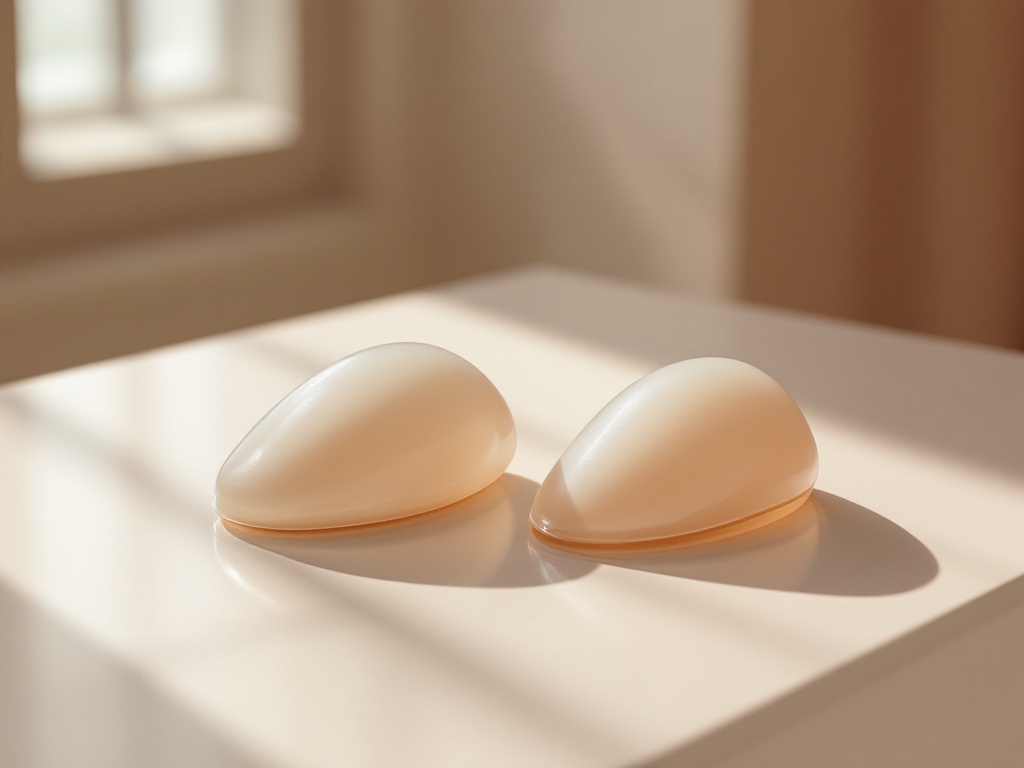
Ask almost anyone who has researched breast augmentation and they will tell you the same thing: implants last ten years, then they need to be replaced. The claim appears in consultation rooms, patient forums, and countless articles. It is stated with the confidence of a law of physics. But it is not a rule found in surgical literature, and understanding where it came from helps patients plan more realistically for the decades after surgery.
Where the ten-year figure originated. The number appears to trace back to two sources: early manufacturer warranty periods and older generations of silicone devices. Implants produced in the 1970s and 1980s had thinner shells and less cohesive filler, and their failure curves did climb noticeably after a decade. Manufacturers also structured their free-replacement warranties around a ten-year window, which patients and even some clinicians interpreted as an expiration date. A warranty term is a business decision, not a biological finding. Modern fifth-generation devices use thicker, multi-layer elastomer shells and highly cohesive gel that behaves more like a solid than a liquid, and their published rupture data looks meaningfully different from the devices that created the ten-year folklore.
What the actual failure data shows. Long-term core studies submitted to regulators report cumulative rupture rates for current cohesive gel implants in the range of roughly 7 to 14 percent at ten years, depending on the device and whether the surgery was a primary augmentation or a revision. Read that carefully: it means the large majority of implants are intact at the ten-year mark. Saline implants deflate at broadly comparable rates, though a saline failure announces itself quickly because the breast visibly loses volume as the body absorbs the sterile fluid. Silicone failures can be silent, which is a separate issue from lifespan and the real reason surveillance matters.
The mechanism of failure is fatigue, not expiration. An implant shell does not degrade on a calendar schedule. It fails through mechanical fatigue: repeated folding of the shell at the same point, friction against a calcified capsule, or damage introduced at the time of surgery, sometimes by an instrument or a needle during a later procedure. This is why underfilled saline implants and poorly matched pocket dimensions raise failure risk. A shell that folds constantly wears at the fold line the way a paperclip bent back and forth eventually snaps. Fatigue is probabilistic. Some implants fail at year six, many are documented intact past year twenty.
What actually drives most revisions. Here is the part the myth obscures: the most common reasons for reoperation are not rupture at all. Capsular contracture, the progressive tightening of the scar tissue envelope around the device, accounts for a substantial share of revisions. So do size change requests, implant malposition, rippling, and changes in the breast itself from pregnancy, weight fluctuation, or aging tissue. The implant may be perfectly intact while the aesthetic result no longer satisfies the patient. Framing revision as an implant durability problem misses that it is often a soft tissue and preference problem.
What surveillance is recommended instead of automatic replacement. Regulators in the United States currently recommend that patients with silicone gel implants undergo imaging surveillance, with ultrasound or MRI starting around five to six years after placement and repeating every two to three years thereafter. The purpose is to catch silent rupture, in which cohesive gel remains contained within the scar capsule and produces no symptoms. If imaging confirms rupture, removal or replacement is advised because extracapsular gel migration, while uncommon with cohesive fillers, can cause inflammation and granuloma formation. If imaging shows an intact device and the patient is happy, there is no evidence-based mandate to operate.
The honest framing for patients. Breast implants are best described as long-lasting but not lifetime devices. A patient having augmentation at 25 should expect at least one additional operation during her lifetime, possibly more, but the trigger will likely be a clinical finding or a personal choice rather than a date on the calendar. Preventive replacement of a healthy, intact implant exposes the patient to surgical and anesthetic risk with no demonstrated benefit, which is why major plastic surgery societies do not endorse routine scheduled exchange.
Practical takeaways. Keep your device card, which records the manufacturer, style, and serial number, because it matters for warranties and future imaging interpretation. Follow the imaging schedule for silicone devices even when everything feels normal. Report new firmness, shape change, pain, or asymmetry promptly, since these can signal contracture or rupture. And when someone repeats the ten-year rule, understand it as a rough historical artifact, not a medical requirement. The correct answer to how long implants last is unsatisfying but true: until surveillance or symptoms say otherwise.
Related reading: The 10-Year Replacement Rule: What the Evidence Actually Says About Implant Lifespan.