
Explainer · July 30, 2026 · 5 min · By Beatriz Holmgren
Over, Under, or In Between: What Implant Placement Actually Changes
Subglandular, submuscular, and dual plane are not marketing terms. Each pocket changes how an implant looks, ages, and behaves. Here is the mechanics behind the choice.
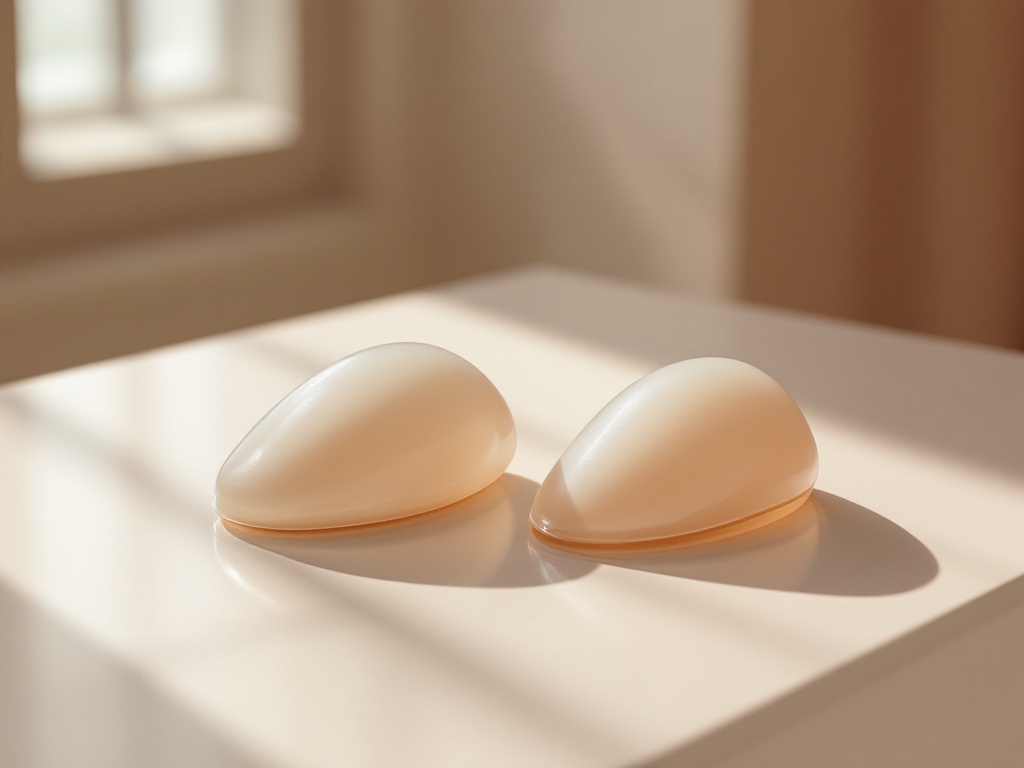
Ask three surgeons where an implant should sit and you may get three different answers, all of them defensible. Placement, meaning the anatomical pocket the implant occupies, is one of the most consequential decisions in breast augmentation, and it is often explained to patients in a rushed sentence or two. This piece walks through the three main options, the mechanisms behind their trade-offs, and why the right answer depends on tissue, not preference alone.
The three pockets, in plain terms. In subglandular placement, the implant sits behind the breast gland but on top of the pectoralis major muscle. In submuscular (more precisely, partial submuscular) placement, the upper portion of the implant sits beneath the pectoralis major, while the lower pole is typically covered by fascia and breast tissue, since the muscle does not extend all the way down. Dual plane is a refinement of submuscular placement: the surgeon releases the lower edge of the muscle to a controlled degree, letting the implant sit under muscle at the top and directly behind the gland at the bottom. Most modern submuscular augmentations are technically dual plane of some variety.
Why coverage matters: the soft tissue equation. An implant is only as invisible as the tissue covering it. Rippling, visible edges, and a stuck-on upper pole appearance all trace back to one variable: how much living tissue sits between the implant shell and the skin. Pinch the tissue at the upper inner breast. If that pinch measures under roughly 2 centimeters, a subglandular implant is likely to show. The pectoralis muscle adds a layer of padding exactly where padding is scarce, which is the main mechanical argument for going under the muscle in thinner patients.
Why subglandular still has a case. Placing the implant over the muscle avoids one specific problem: animation deformity. When an implant sits under the pectoralis, contracting that muscle, as happens during push-ups, lifting, or pressing motions, can visibly shift or distort the implant. For athletes, bodybuilders, and anyone whose work involves repetitive chest loading, this is not cosmetic trivia. Subglandular placement also tends to produce a fuller, rounder look in patients who already have adequate tissue thickness, and recovery is often faster because no muscle is elevated or released. The trade-off is a historically higher reported rate of capsular contracture in some studies, though modern implant surfaces and surgical technique have narrowed that gap.
Why dual plane became the default for many surgeons. Dual plane tries to capture both benefits. Muscle coverage at the top hides the implant edge where tissue is thinnest. Direct implant-to-gland contact at the bottom lets the implant expand the lower pole and settle into a natural teardrop shape. This matters mechanically in patients with mild sagging or a tight, constricted lower breast: if the muscle fully covered the lower pole, the gland could slide off the front of the implant over time, creating a double contour sometimes called a waterfall deformity. Releasing the muscle to the right degree, graded in the surgical literature as types 1 through 3 depending on how much release is performed, prevents this mismatch.
What placement does not change. No pocket choice eliminates the need for long-term implant surveillance, changes the recommended monitoring schedule for silicone devices, or prevents capsular contracture entirely. Contracture is a biological response, scar tissue tightening around the implant, and while placement may influence its statistical likelihood, it does not remove the risk. Placement also does not meaningfully change implant lifespan.
Recovery differences are real but modest. Submuscular and dual plane approaches involve elevating muscle, so early postoperative discomfort is typically greater and the implants often ride high for several weeks before the muscle relaxes and the implants settle, a process patients hear described as drop and fluff. Subglandular recovery tends to be quicker, with less restriction on early arm movement. Neither approach should be chosen on recovery speed alone, since the aesthetic result lasts decades and the recovery difference lasts weeks.
The honest bottom line. Placement is a tissue-driven decision. Thin coverage, minimal native breast, and a desire for a natural slope favor dual plane. Thick, ample tissue with heavy athletic demands on the chest can favor subglandular. A surgeon who examines your tissue, measures pinch thickness, and explains why one pocket suits your anatomy is giving you engineering, not salesmanship. A surgeon who offers the same placement to every patient regardless of anatomy is worth questioning. The pocket is invisible on the outside, but it quietly determines how the result looks in year one and how it holds up in year ten.
Related reading: Over, Under, or In Between: How Implant Pocket Placement Actually Changes Outcomes.